What Is the Best Way to Deal with a Neglected Mature Tree?
Mature trees can be some of the most impressive features within a garden, providing character, shade, privacy and an established appearance that takes decades to develop. However, when a tree has received little or no maintenance for many years, its condition can become increasingly difficult to manage. Dead branches may accumulate, the crown can become excessively dense, limbs may extend towards buildings, and structural weaknesses can remain unnoticed.
For property owners in St Neots, Cambridgeshire, dealing with a neglected mature tree should begin with a professional assessment rather than immediately assuming that extensive pruning or complete removal is necessary. At St Neots Tree Surgeons, we assess the tree as a whole before recommending appropriate tree surgery, with the aim of improving safety, condition and manageability while retaining healthy mature trees wherever suitable.
Start with a Proper Tree Assessment
The first step is understanding why the tree has become a concern.
A professional tree surgeon will consider factors such as:
- Overall tree condition
- Dead or damaged branches
- Crown density and balance
- Structural weaknesses
- Previous pruning
- Proximity to buildings and garden features
- Branches extending into unsuitable areas
This assessment helps distinguish between normal mature growth and problems that require professional intervention.
Remove Dead Wood Where Necessary
Dead branches are common in mature trees, but significant deadwood should not simply be ignored.
Branches can die because of natural ageing, shading, previous damage or declining health. Once dead, they may gradually become weaker and more likely to break away.
Professional deadwood removal can improve the safety of the surrounding area while making the crown appear cleaner and better maintained.
Avoid Removing Too Much at Once
A neglected tree may look as though it needs drastic pruning, but aggressive cutting is not necessarily the best approach.
Removing excessive amounts of healthy growth can place unnecessary stress on a mature tree and encourage undesirable regrowth. The objective should be to carry out appropriate work based on the tree’s condition rather than simply making it substantially smaller.
In some circumstances, improvement may be better achieved gradually through carefully planned maintenance.
Consider Crown Reduction for Excessive Growth
Where a mature tree has become too large for its surroundings, crown reduction may be appropriate.
This involves carefully reducing the height and spread of the canopy while retaining a balanced natural form.
Crown reduction can be useful where branches have begun to:
- Extend excessively across a garden
- Grow towards buildings
- Interfere with usable outdoor space
- Create an unbalanced canopy
- Place excessive leverage on particular limbs
The amount of reduction should always reflect the tree species, condition and structure.
Crown Thinning Can Improve an Overly Dense Canopy
Some mature trees develop dense crowns containing large numbers of smaller branches.
Selective crown thinning removes carefully chosen branches throughout the canopy without substantially changing its overall dimensions.
When appropriate, this can improve:
- Light penetration
- Air movement
- Crown structure
- The appearance of the canopy
It is a selective process rather than simply cutting branches from the outside of the tree.
Crown Lifting Can Improve Clearance
Low-growing branches can gradually begin to interfere with the space beneath a mature tree.
They may restrict:
- Pedestrian access
- Driveway use
- Garden maintenance
- Views across the garden
- Light reaching areas below
Crown lifting involves removing selected lower branches to create additional clearance while retaining the main structure of the tree.
Address Damaged or Crossing Branches
Years without maintenance can result in branches rubbing against one another or growing into unsuitable positions.
Repeated contact can damage bark and create weaknesses over time. Broken branches from previous weather events may also remain within the canopy.
Selective pruning can remove problematic growth while improving the tree’s overall structure.
Look Beyond the Appearance of the Tree
A neglected mature tree should not be assessed purely on whether it looks untidy.
Some trees with irregular crowns remain structurally suitable, while apparently healthy trees may contain defects that are difficult to recognise from ground level.
Professional tree surgery focuses on the tree’s condition and structure first. Improving appearance is important, but it should be achieved without compromising long-term tree health.
When Might Removal Be Necessary?
Many neglected mature trees can be managed successfully through pruning and ongoing maintenance. However, retaining the tree may not always be appropriate.
Removal may need to be considered where there is substantial deterioration, severe structural instability or another condition that makes continued retention unsuitable.
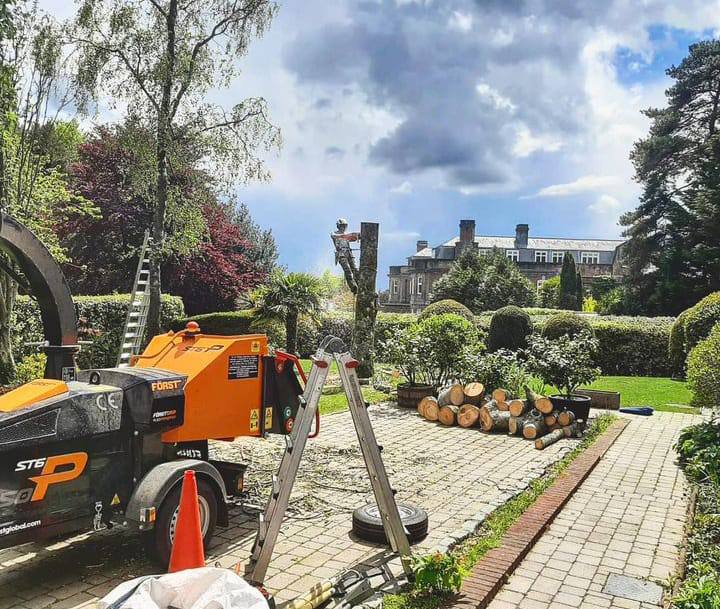
If removal is necessary in a restricted garden, sectional dismantling may allow the tree to be taken down progressively rather than felled in one piece.
Why Regular Maintenance Matters Afterwards
Restoring a neglected tree should not be viewed as a one-off opportunity to carry out excessive cutting.
Once suitable initial work has been completed, periodic assessment and maintenance can help prevent the tree from returning to an unmanageable condition.
Ongoing care makes it easier to:
- Identify deadwood
- Manage excessive growth
- Maintain suitable clearance
- Monitor structural changes
- Preserve a balanced canopy
Regular attention is generally preferable to allowing many years of unchecked growth followed by major intervention.
Mature Trees Are Worth Managing Carefully
An established tree can contribute enormously to the character of a property. Replacing that maturity takes many years, which is why unnecessary removal or excessively harsh pruning should be avoided.
Professional tree surgery aims to find the appropriate balance between retaining the benefits of a mature tree and addressing genuine problems affecting its safety, condition or suitability for its surroundings.
Why Choose St Neots Tree Surgeons?
At St Neots Tree Surgeons, we provide professional tree surgery services throughout St Neots, Cambridgeshire. We assess mature trees individually, considering their species, structure, condition and location before recommending suitable work.
Our tree surgery services include:
- Tree pruning
- Deadwood removal
- Crown reduction
- Crown thinning
- Crown lifting
- Tree reshaping
- Sectional dismantling
- Tree removal
- Stump grinding
Whether a mature tree requires selective maintenance or more extensive attention, our focus is on carrying out appropriate work with careful consideration for both the tree and its surroundings.
Conclusion
The best way to deal with a neglected mature tree is to begin with a professional assessment rather than assuming it requires severe pruning or removal. Deadwood removal, crown reduction, thinning, lifting and selective pruning can all play a role, but the correct approach depends on the individual tree.
Thoughtful tree surgery can make an established tree safer, more manageable and better suited to its surroundings while preserving the maturity and character it brings to the garden.
For property owners in St Neots, Cambridgeshire, St Neots Tree Surgeons provides professional assessment and tree surgery for mature and overgrown trees. If an established tree has been neglected for several years, our experienced team can assess its condition and recommend a practical approach to managing it for the future.
Call us on: 01480 776 299
Click here to find out more about St Neots Tree Surgeons
Click here to complete our contact form and see how we can help with your tree needs.